

A VPN is a technology designed to create an independent private subnetwork inside a public network. This subnetwork cannot communicate with the other users or systems of the main network. "Virtual private network" (VPN) is the full name of the technology.
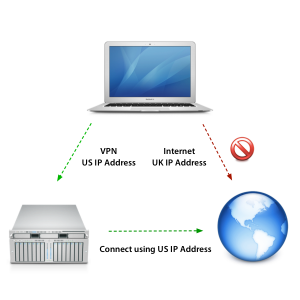
VPN architecture
Those who want to set up a VPN connection have several options, based on layers 2 and 3 of the OSI model. A VPN can be installed and managed at the customer's office or home, or by a telecommunications provider. The methods can be combined to meet special requirements.
Types of VPN
Trustworthy VPNs use encrypted tunneling protocols (cryptographic tunneling protocols). Because they are encrypted, these protocols keep data safe by verifying the sender's authenticity and the integrity of messages. When configured and used correctly, VPN servers can provide secure communication by encrypting data across an unreliable network.
Choosing, implementing and using such a setup are not simple tasks, so the market has many unreliable (unsatisfactory) VPN schemes.
Secure VPN technologies can also be used to improve security inside network infrastructure.
Examples of secure (viable) VPN protocols:
- IP security (IPsec), used on IPv4 and partly mandatory on IPv6.
- Secure Sockets Layer / Transport Layer Security (SSL/TLS), used either for a whole network, as in the OpenVPN project, or to secure a web proxy.
- Layer 2 Tunneling Protocol (L2TP), created through cooperation between Microsoft and Cisco.
- Multi-Protocol Label Switching (MPLS), often used to build a reliable VPN.
- UT-VPN, a protocol developed at the University of Tsukuba (Japan) and written from 2010 by Daiyuu Nobori. RoTunneling VPN builds on it.
Tunneling
Tunneling means sending data across a public network so that it is not seen as ordinary information transport, but as part of a private network. It works by encapsulating the private network's data and creating a protocol that lets no one else access it. Tunneling makes it possible to use public internet networks as "private" or nearly private networks.
RoTunneling VPN uses our own native protocol with 6 transport modes, which start like a browser on port 443 and get past network blocks. It also supports:
- OpenVPN;
- IPsec / L2TP;
- MS-SSTP VPN.
You can choose among them depending on your device and the network you are on. See the download pages for apps and setup guides.